
Scott County Parole Versus Probation
Virginia Department of Corrections guidance separates the two forms of supervision. Probation is a court-ordered status. It may take the place of incarceration, follow a local jail stay, or begin after a suspended portion of a sentence. Parole is release from incarceration under Virginia Parole Board authority, with rules that continue in the community. This distinction matters in Scott County because a probation entry alone does not show that a person ever left a state prison.
Both statuses can lead to a VADOC community-supervision office, yet they prove different events. A prison or regional-jail location in the VADOC locator means custody still continues. A probation or parole district can support that the person is outside prison under active supervision. Neither status means final discharge. Final discharge is the later point when VADOC supervision has ended.
| Point | Parole | Probation |
|---|---|---|
| Source of status | Release under Parole Board authority | Order entered by a court |
| Prior incarceration | Follows incarceration | May occur with or without incarceration |
| Public first check | VADOC locator plus Board records | VADOC locator plus the court case |
| What the result proves | Active parole if the current record says so | Active probation if the current record says so |
- Supervision
- Rules and contact with a probation or parole officer while living outside a prison.
- Discharge
- The formal end of the correctional agency's custody or supervision relationship.
- Absconder
- A person alleged to have stopped reporting or left supervision without approval; the label must come from an official record.
- Detainer
- A request or legal basis for another agency to take custody.
Check Scott County Post-Release Supervision
The official first check is the VADOC Inmate and Supervisee Locator. It covers people in state institutions, some people held in local or regional jails under state authority, CCAP participants, probationers, and parolees. Use a seven-digit DOC ID when known. A name search needs at least the first three letters of the first name and the full last name; optional age, race, gender, and location fields can separate similar results.
- Search by DOC ID, or enter the permitted name fields and complete the portal disclaimer and CAPTCHA.
- Match the DOC ID and identity details. Do not rely on a common name alone.
- Read the exact status and location. A prison or jail location means incarceration continues; a district office points to community supervision.
- For a Scott County community result, contact District 18 and ask whether the public entry is current and which office serves the case.
- For probation, compare the court order. For parole, compare the Parole Board action. Neither source replaces the VADOC custody record.
VADOC says its locator updates daily and may be inaccurate or out of date. It is not a minute-by-minute supervision history. A fully inactive case may no longer appear. VADOC Form 050_F17 is the route described for an inactive inmate or CCAP probationer/parolee record, subject to identity, authorization, notarization, and correctional-record limits.
Note: A missing locator entry does not establish discharge, a violation, or absconder status without a current agency record.
Scott County District 18 Supervision
Scott County is served by VADOC Probation and Parole District 18. The published office is in Norton, and VADOC also lists Duffield and Clintwood presences. This is a meaningful local routing point: Scott supervision belongs to District 18, not Abingdon District 17. The state facilities page appears to repeat an Abingdon-area service tooltip beneath Norton, so the duplicated tooltip should not be treated as the controlling Scott County description.
VADOC Probation and Parole District 18
1650 Park Avenue SW
Norton, VA 24273
276-679-9201
The District 18 resource directory is the better local reference for Scott County's Norton, Duffield, and Clintwood network. Office staff may limit what they disclose. Ask a narrow status question tied to a matched DOC ID instead of requesting a broad personal history.
The official District 18 listing can be viewed on the VADOC facilities and offices page before using the office details.
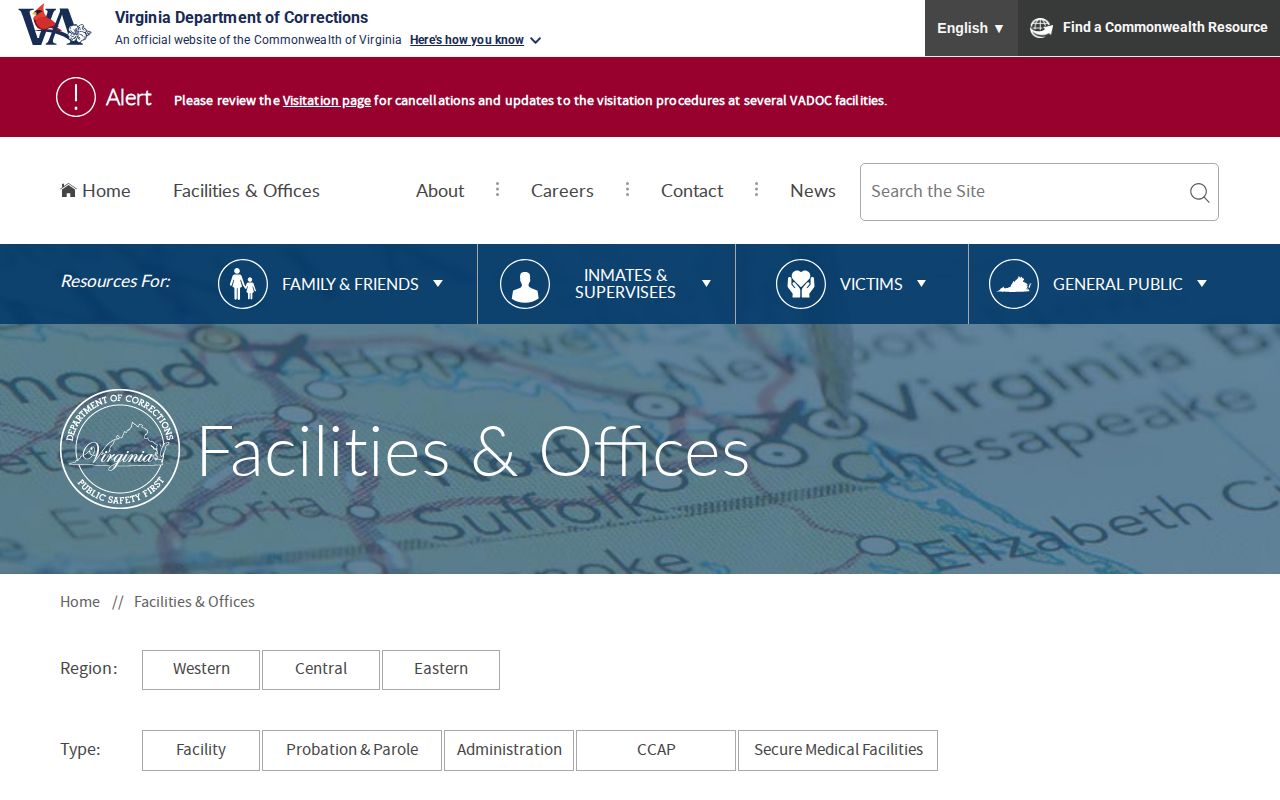
The captured office card supports the Norton route, while the district directory supplies the broader local service network.
Scott County Parole Decision Records
Parole decision evidence comes from the Virginia Parole Board, not the district locator alone. The public-meetings page provides upcoming meeting information, agendas or people to be heard when available, livestream details, and approved minutes. Since July 1, 2024, the Board has been required to hold a public meeting for final deliberation and the vote on whether parole will be granted.
The separate monthly parole reports archive posts decision PDFs by month and year. Search the proper PDF using the person's name or DOC identifier and preserve the official action wording. A grant authorizes parole but is not the physical release time. A not-grant means parole was denied in that review. Deferred, rescinded, and violation-related actions should not be flattened into a simple released or not-released label.
Virginia Code § 53.1-151 contains legacy eligibility fractions, caps, exclusions, and special rules. § 53.1-165.1 and related provisions limit ordinary parole and preserve special categories. Virginia generally abolished discretionary parole for felony offenses committed on or after January 1, 1995, but offense date and exceptions make a blanket rule unsafe. Eligibility allows consideration. It does not predict a grant or release day.
Note: Pair a Board action with the VADOC status and actual release record before describing a Scott County prison exit.
Scott County Supervision Violations
Probation and parole conditions are the rules imposed by the court, Board, or supervising agency. The exact terms belong to the person's order and supervision record. A suspected breach can lead to investigation, a violation process, or a warrant, but those steps are not interchangeable. An inability to reach a person does not prove absconding. Nor does a missing web result.
Verify a claimed violation through the current court docket, a properly matched VADOC record, or the supervising office. If a warrant is relevant, use the official court or law-enforcement source that issued or holds it. Selective wanted pages are not complete supervision lists. A new Scott County arrest also does not, by itself, explain whether parole or probation was revoked.
Keep the records separate. A court filing proves a judicial step, a VADOC entry proves the agency status it displays, and a jail record proves the custody event it records.
Virginia Jail VINE may report a local-jail custody change. It does not report VADOC inmate supervision. State notifications for eligible registrants use NAAVI. Neither notification service should be used to infer an unlisted violation.
Scott County Reentry After Release
District 18's local role extends beyond checking a status. Its resource directory organizes paths for treatment, health care, transportation, identification, food, and other forms of stabilization across the Norton, Duffield, and Clintwood area. These are navigation categories, not proof that a person is enrolled or that any provider will accept a referral.
Start with the current District 18 directory and confirm a provider's terms directly. Listings can change. The directory is especially useful when a Scott County release leads to supervision in the same region, because a local office can identify which resources fit the active plan. Conditions remain person-specific, so a service listing should not be mistaken for an official condition of parole or probation.
Scott County Release ID and Property
Two different release settings have distinct rules. For a former SWVRJA inmate, the authority's inmate-mail instructions say the person can use SmartInmate credentials to download stored photos, messages, and postal mail at no charge. That is a post-release communications and property process. It does not confirm the release date or supervision status.
For a qualifying state-prison release, Virginia Code § 53.1-31.4 requires specified VADOC help with identification before release. The state statute should not be applied to a regional-jail case, and the SWVRJA account procedure should not be described as a VADOC discharge service. The custody source decides which route applies.
Note: SmartInmate access concerns stored communications after an SWVRJA release, not proof of parole, probation, or final discharge.
Scott County Supervision Notifications
Virginia uses separate notification layers. Virginia Jail VINE serves participating local jails, including SWVRJA. NAAVI supports VADOC notices for eligible registered victims, such as permanent transfer, advance release, a changed advance-release date, and actual release. The public sex-offender registry is a third system for people who have a legal registration duty. Registration in one does not carry into either of the others.
A jail VINE alert that says released may mark a transfer to another jail or custodian. Ask SWVRJA whether the event was community release or transfer. A NAAVI actual-release notice means the person is no longer in VADOC custody and those VADOC notices stop, but separate supervision or registration questions can remain. For the exact jail alert workflow, use the Scott County VINELink release check.
Scott County Supervision Discharge
Release from incarceration and discharge from supervision are different dates. A person may leave prison for parole or probation and stay within VADOC's active system. The current locator can show a community district during that phase. Once the whole VADOC relationship is inactive, the live locator does not promise a complete historical result.
For a completed case, request the existing record showing the actual release from incarceration, the release type, whether community supervision followed, and the final discharge date. VADOC may direct an eligible requester to Form 050_F17 and its secure identity process. Virginia Code § 2.2-3706 makes specified imprisonment and probation or parole records discretionary, so the entire file is not guaranteed.
For a local jail release, use the SWVRJA final custody event rather than a probation entry to prove the door-out time. The full Scott County custody and records sequence is described on the released-inmate search home page. Keep each date labeled: court order, actual jail release, supervision start, and final discharge.